

About
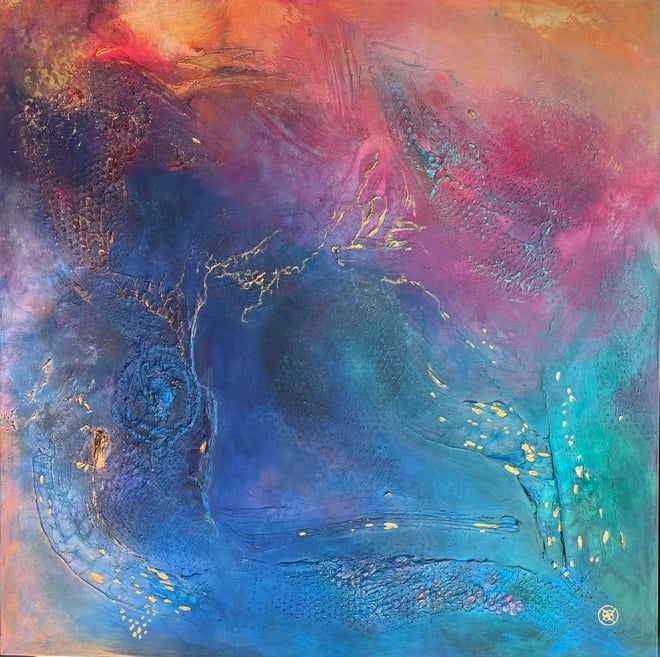
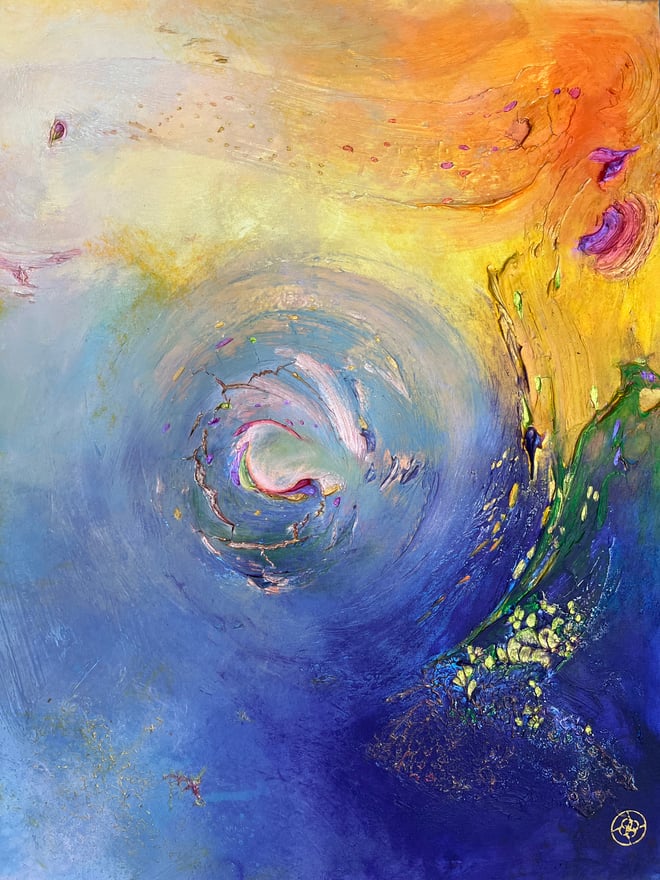
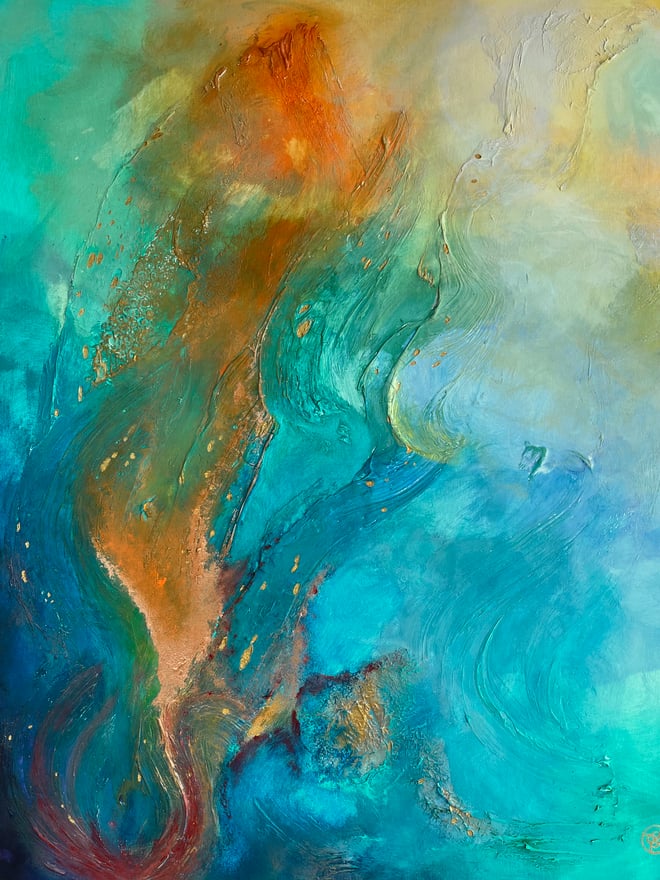
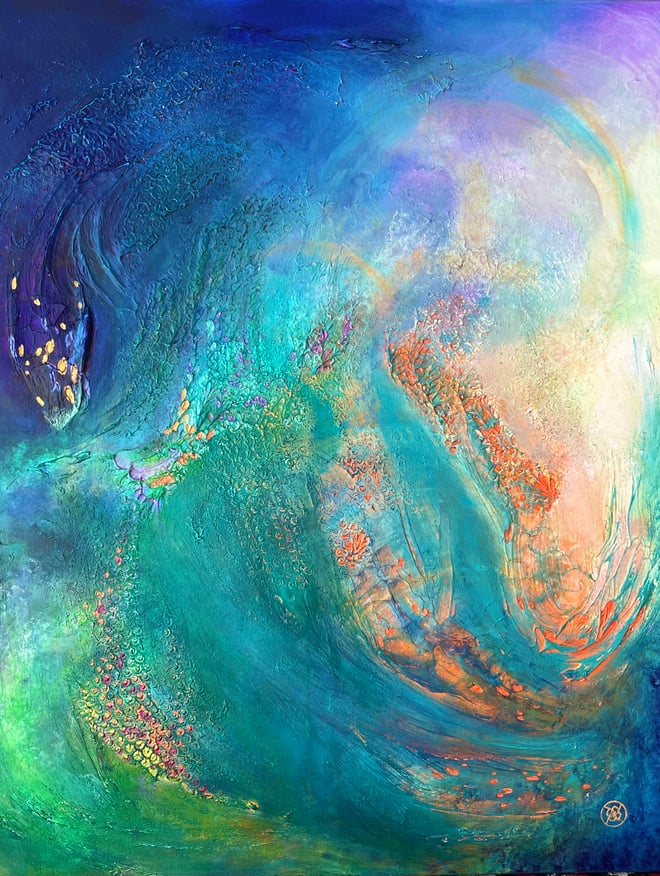
Helena Smeds is a contemporary Swedish artist whose abstract painting explores the interplay between nature, light, movement, depth, and human perception and experience. Her work inhabits a space between the organic and the cosmic, where layered colour, built-up structures, and shifting forms create spaces for both presence and interpretation.
Drawing on a background in psychology and a PhD in bilingualism, Smeds’ artistic practice nevertheless emerges primarily through intuition, flow, and experimentation. Her process is exploratory and spontaneous, allowing material, movement, and creative impulse to interact and shape each work.
Nature’s rhythms, oceans, light phenomena, organic structures, and aspects of our inner and outer universe recur as underlying references, never depicted literally. Instead, Smeds creates pictorial spaces in which depth, movement, transformation, and perception become central. Successive layers of colour and structure build a sense of spatiality and rhythm, while light becomes an active element of the image. The paintings shift with changing light, viewing distance, movement, and attention.
”Windows to the Soul of the Universe” is an ongoing body of work exploring the relationship between human experience and recurring patterns in our inner and outer nature—from the microscopic to the cosmic. Rather than offering fixed narratives, the paintings invite an open, personal encounter in which connections and meanings emerge through the viewer.
Smeds has exhibited in solo and group exhibitions in Sweden, including at NK Stockholm during spring and summer 2026 with Artist Arena, as well as in international exhibitions and curator-led projects in Italy, including Rome and L’Aquila. During Venice Biennale, in the autumn of 2026, she will also exhibit at Venice International Art Fair. In December 2026, her work will be presented in the contemporary art catalogue The Form of the Invisible: Art as Revelation and Cure for the World, curated by Monica Ferrarini and Alice Di Piero.

Gaia dreaming to mother earth with love series


Inspiration
Inspiration is drawn from multiple sources—scientific, cosmic and universal.
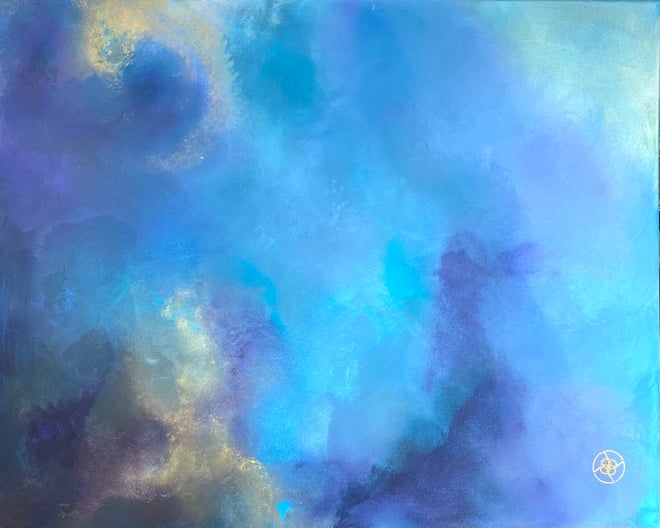
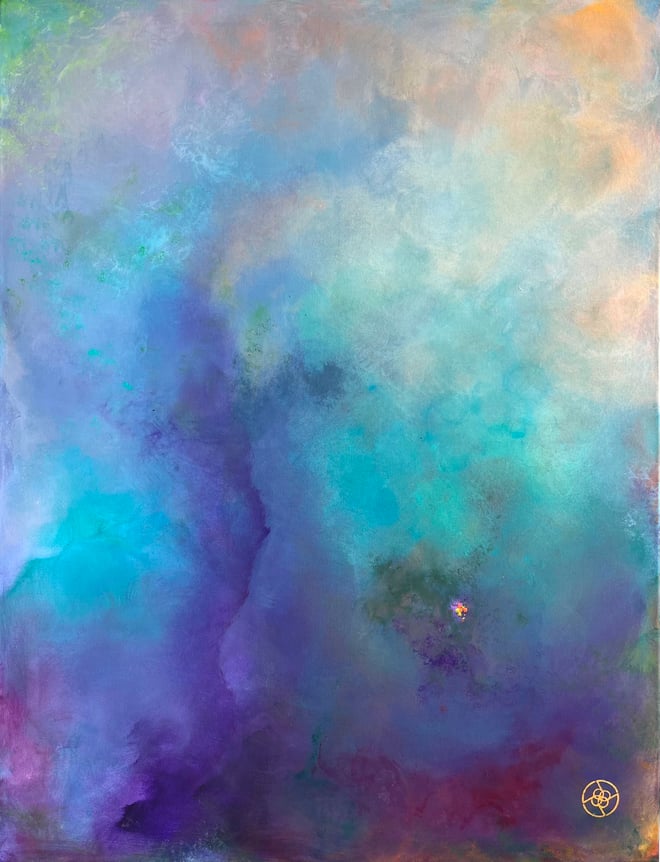
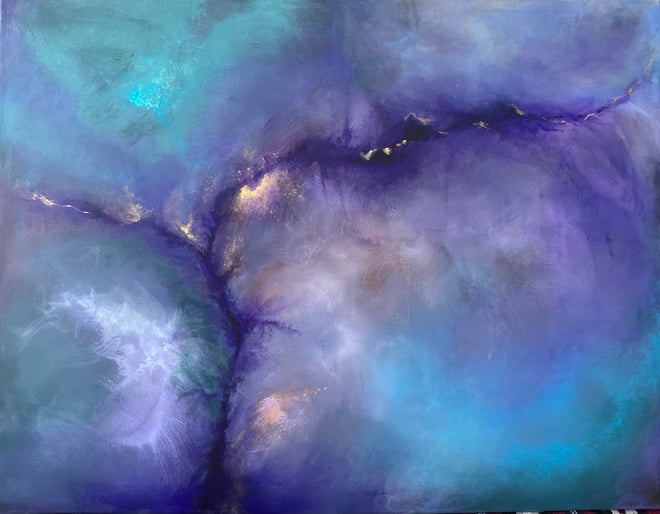
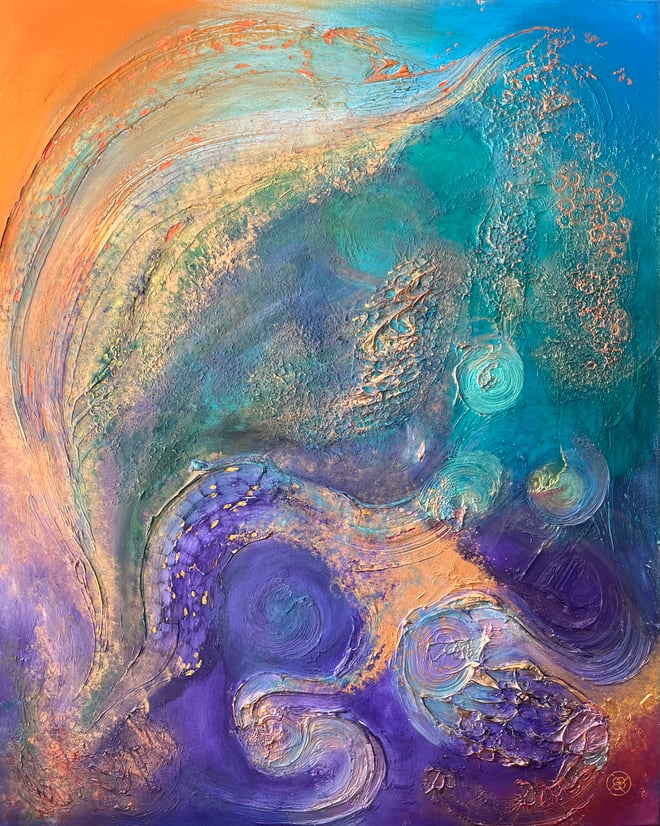
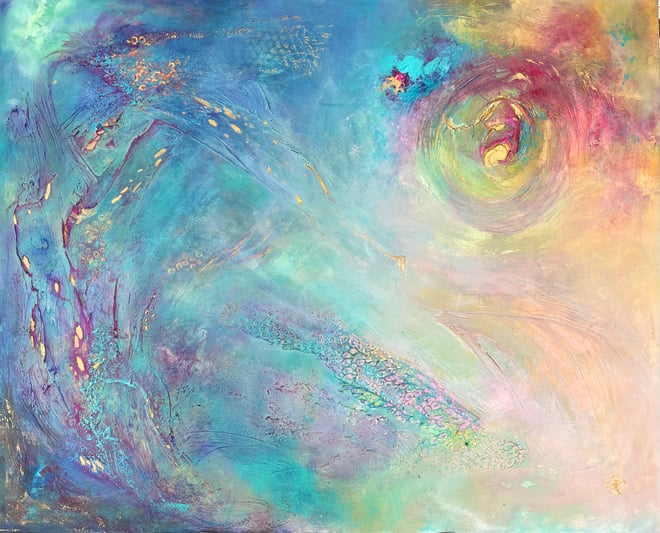
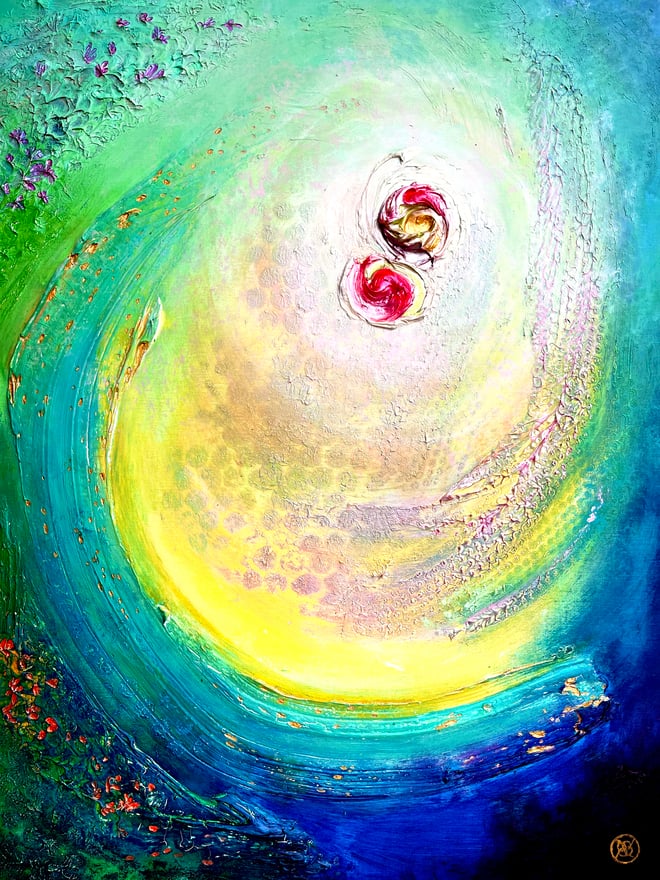
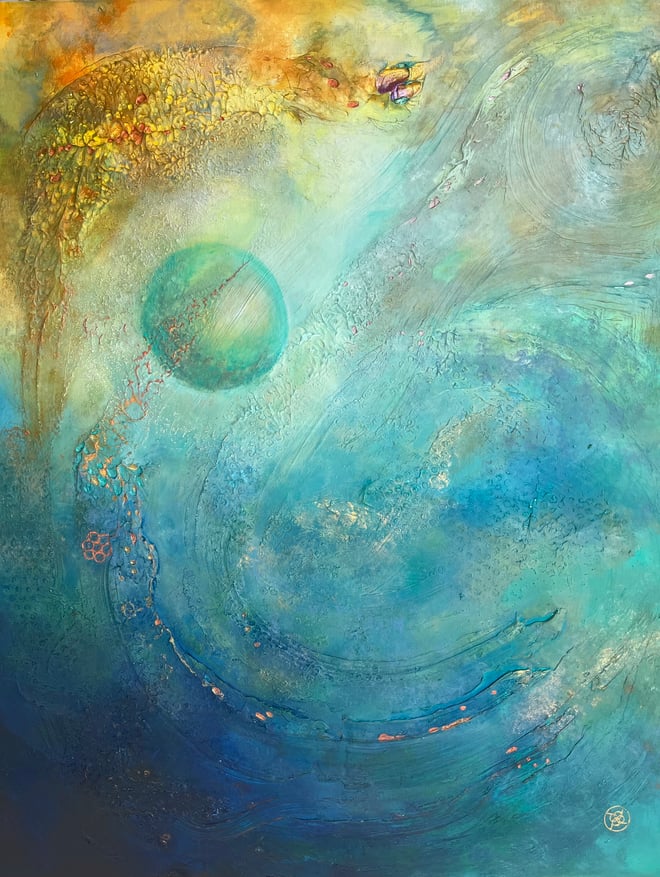
1. The marine realm and subaquatic environment which often can be seen in my choice of colors. The turquoise, blue, and green tonalities, combined with sweeping compositional movements, evoke the fluid dynamics of water, waves, or currents. The metallic details reflect light effects and the refraction of light through water—reminiscent of viewing the seabed from the surface or the other way around.
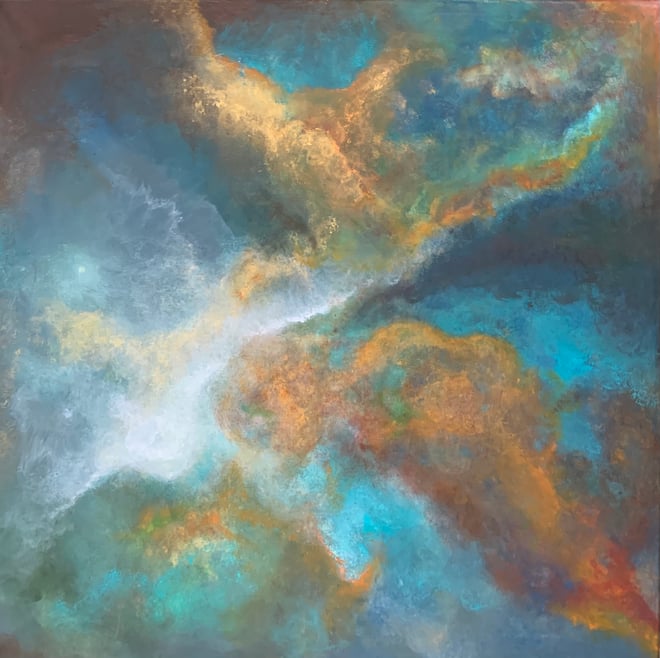
2. Cosmos and astronomy inspire numerous works that display cosmological flow, energetic streams, celestial bodies, foreign galaxies and nebulae.
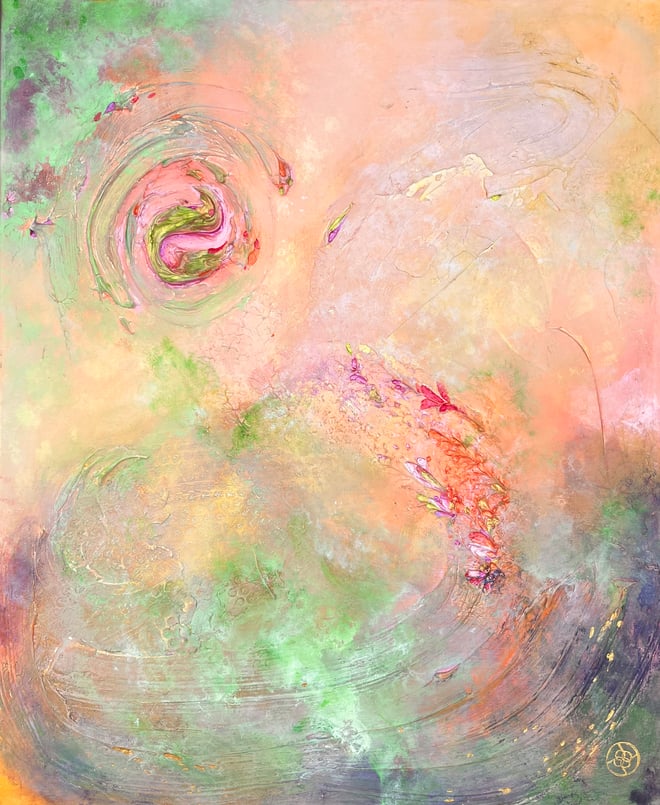
3. Nature's organic patterns and color expressions.
4. The meta physics and aspects of the unseen world are also a sources of inspiration. The recurring spiral motifs suggest a connection to energy flows, vital force, and life's evolution. Many pieces thus express life's cyclical development and nature, other pieces the stillness and equilibrium that is the foundation underlying all movement and energy.
In the teachings of the Indian tantrik tradition Kashmir Shaivism there is a phenomena called Spanda, that describes the whole universe as a living organism expressed as a pulse; the in-breath and out-breath of the universe itself, like a heartbeat of existence. This phenomena is also a fundamental source of inspiration.
2004-2015 Doctor of Philosophy in Bilingualism, Stockholm University, Centre for Research on Bilingualism.
I was admitted to the doctoral program in June 2004, but received a research grant from the Swedish Research Council for the project "Perceptual Compensation in Blind Second Language Learners," and I began working on the project in January 2008.
The dissertation defense took place on April 10, 2015. Dissertation title: Blindness and Second Language Acquisition. Studies of Cognitive Advantages in Blind L1 and L2 Speakers.
2001-2004 Teaching Degree (M.A.), Stockholm Institute of Education
Specialization in lower secondary, upper secondary school and adults, 330 credits, major subject Swedish as a Second Language. Graduated on May 12, 2004. Additional specialization in psychology 30 credits, and religious studies 30 credits.
1998-2001 Bachelor of Arts (B.A.) in Pedagogy.
Pedagogy 60 points, religious studies 40 points, psychology 20 points.
1989-1991 Secondary School Diploma (Studentexamen), Nacka Gymnasium.
Three-year social sciences with focus on arts
15 September - 13 October 2026, Exhibition with Artist Arena at Fabriken, Textilgatan 33, Stockholm. Vernissage 17 Sept 17-20
18 September - 2 October 2026, Venice International Art Fair, exhibition by ITSLIQUID at Palazzo Albrizzi-Capello. The painting ”Joy of Gaia” will be exhibited.
3 December 2026, the contemporary art catalogue "The Form of the Invisible: Art as Revelation and Cure for the World, published by Gagnemi editore, curated by Monica Ferrarini and Alice Di Piero. The painting "The Big Blue” is selected.
Earlier exhibitions during 2026
7 April - 14 August, 2026: Spring and summer exhibition at NK Stockholm, Sweden, arranged by Artist Arena.
24/6-6/7-26 Summer exhibition at Artist Arenas showroom on Upplandsgatan 48, Odenplan, Sweden. Vernissage 26/6, group exhibition.
16-24 of May, 2026: Exhibition in Rome, SHAKTI - feminine energy and creativity at Borgo Pio Art Gallery in Rome. Group exhibition. Curator: Monica Ferrarini
2 - 16 May, 2026: "VIAGGI: Esperienze emotionale.” Exhibition of modern art at Palazzo dell’Emiciclo in L’Aquila, cultural capital of Italy 2026. Curated by Borgo Pio Art Gallery, Rome.
March 6 - March 17 2026: Exhibition ”Hyperspace” in Rome, Italy at La Pigna Gallery, Palazzo Maffei Marescotti, via della Pigna 13, group exhibition. Curator: Monica Ferrarini
6 December- 17 Januari 2026: Christmas Exhibition at Norrtälje konsthall. A group exhibition.
Mixed media:
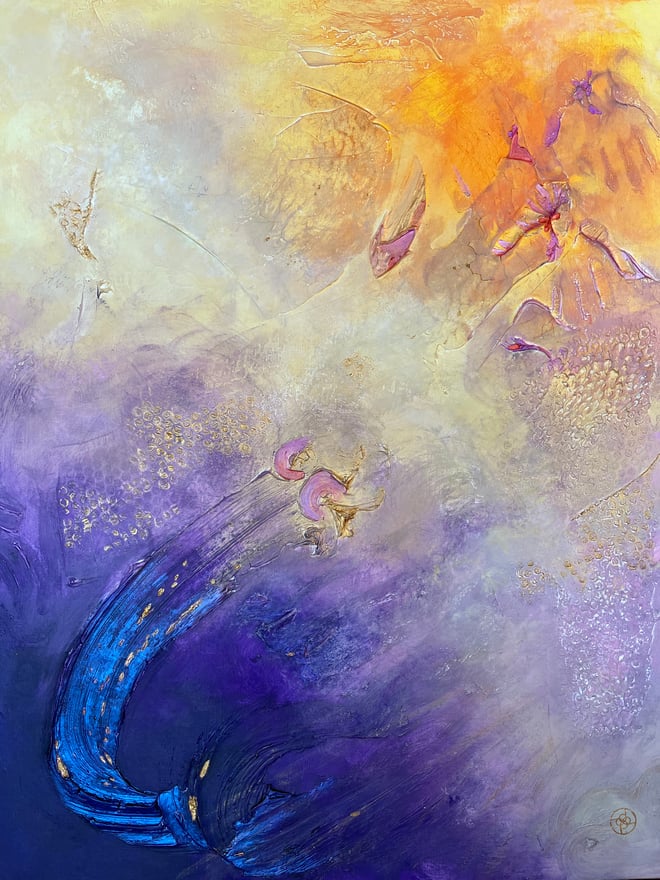
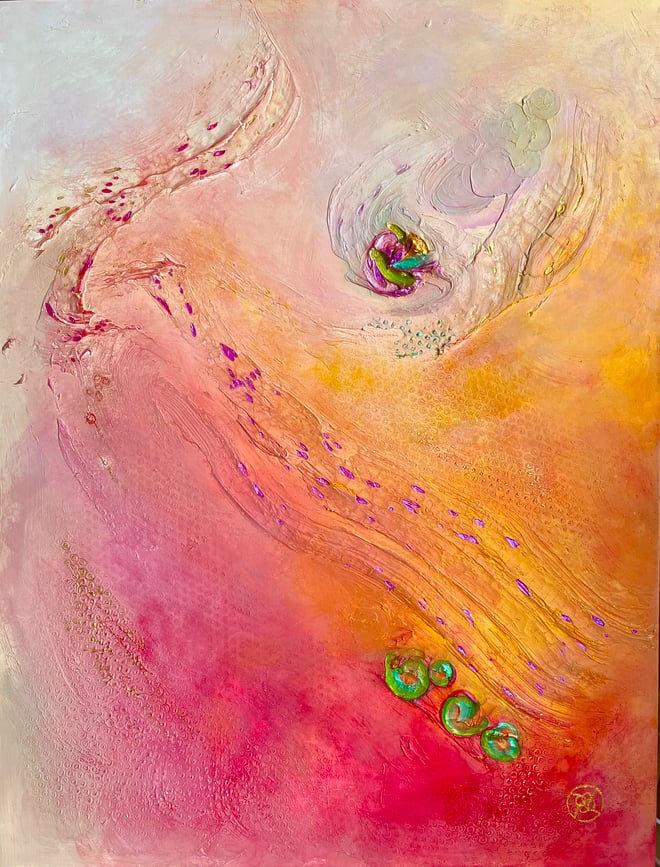
I paint on canvas and build a structure on it with structure paste to create a sense of depth and movement. I usually combine matt and metallic acrylic paint to enhance certain details and, through the contrasting elements, create aliveness. I paint with brushes, hands, sponges, and spatulas, alternating between these tools at different stages of the artwork's creation.
It is so clear to me that the creative processes within the academia and within the world of art are very different from each other—at least for me. When I worked on my dissertation, which is also a creative process, one follows very strict frameworks, logical reasoning and a clear structure.
The artistic process is, on the other hand, intuitive, unstructured and far from logical. It is a much more surprising process in that sense.
I feel fortunate to have had the opportunity, and also the prerequisites, to experience these very different creative processes. For most people, one suits better than the other, but I have enjoyed both. I experience the greatest satisfaction in artistic creation because of the sense of freedom and presence it creates for me. To faithfully follow life's flow, every impulse that arises, without a clear path or goal, is fantastic!
Works for sale (10)
Similar Artists